

Commentary
Because perpetual conflict enhances control, offers economic benefits, and allows leaders to ignore popular preferences.
Angie Omar
The need to deploy public funds for clean energy is clear. But how could the government do it? The Federal Financing Bank could be the answer.
Since my time at the Treasury Department, I have been intrigued by the possibility of repurposing and reimagining various financing mechanisms that currently live at the department in service to the need to finance clean energy supply chains.
I wouldn’t characterize these mechanisms as ready to be deployed by any stretch, but I think they are worth uncovering and then understanding.
One such mechanism is the Federal Financing Bank (FFB), which was created by Congress in 1973. This so-called bank sits inside the Treasury Department and is administered by Treasury career staff—there are maybe four full time people at most running this bank. They have a management structure like any bank, but with a governance structure that consists of the undersecretary for domestic affairs, the assistant secretary for financial markets, and the deputy assistant secretary for public finance. It’s not a bank as we think of banks, but rather a financing vehicle that facilitates borrowing by the various federal agencies so as to limit the stress that federal borrowings might otherwise press on private financial markets.
The Federal Financing Bank borrows from the Treasury and uses these funds to make loans to federal agencies that are tasked by Congress to executing program. Because the FFB can borrow cheaply, it can pass this low-cost funding onto federal agencies that are implementing particular programs. In other words, the federal programs that the FFB are funding are getting funds from the Treasury rather than from private markets; and because this funding is cheaper, there are savings to taxpayers.
The portfolio of the FFB for fiscal year 2024 is currently sized at approximately $185 billion. The breakdown of the loans spans entities like the Rural Utilities Service, HUD’s Risk Share Program, and the DOE Loan Programs Office. The details of these loan facilities need examination, but the point is that there is an entity already stood up by Congress inside the Treasury that can potentially serve as an adjunct credit facilitator to clean energy supply chain federal projects. The funding is internal, and so the FFB mechanism has the potential to bring down the cost of financing these projects.
More exploration has to be considered here—for example, what federal programs exist whose cost could be reduced by virtue of this mechanism? And what federal programs could be created that relate to clean supply chains that could use a financing facilitator? Is the mandate for the Federal Financial Bank broad enough to contemplate its use in other ways, while staying consistent with the Congressional intent that created it? What other financial plumbing mechanisms exist at the Treasury and even elsewhere—like the Department of Agriculture—that can be deployed to bring down the cost of creating clean supply channels? Does the Exchange Stabilization Fund have relevance to the financing of clean supply channels?
In working on this Carnegie taskforce, we’ve reminded each other of why the United States should strengthen clean energy supply chains, both at home and abroad, and explored the best measures for doing so. But we can’t forget the how: when the political will is there, policymakers will need to know how to best provide the finance to the clean energy projects that will secure U.S. prosperity and security in the future.

Sarah Bloom Raskin
Sarah Bloom Raskin is the Colin W. Brown Distinguished Professor of the Practice of Law at Duke University and was previously the deputy secretary of the U.S. Department of the Treasury from 2014 to 2017. Prior to her role at the Department of the Treasury, Raskin was a governor of the Federal Reserve Board and a member of the Federal Open Market Committee.
Carnegie does not take institutional positions on public policy issues; the views represented herein are those of the author(s) and do not necessarily reflect the views of Carnegie, its staff, or its trustees.

Because perpetual conflict enhances control, offers economic benefits, and allows leaders to ignore popular preferences.

Angie Omar
The closure of the Strait of Hormuz has triggered a global energy crisis, but Europe is stuck in reaction mode. Without more strategic foresight, the EU will remain dependent on fossil fuels and will never be truly secure.


Milo McBride, Pauline Gerard

Ensuring that cities’ perspectives shape international discussions at this year’s forums is not just equitable; it is likely to produce better outcomes.


Liliana Gamboa, Marissa Jordan
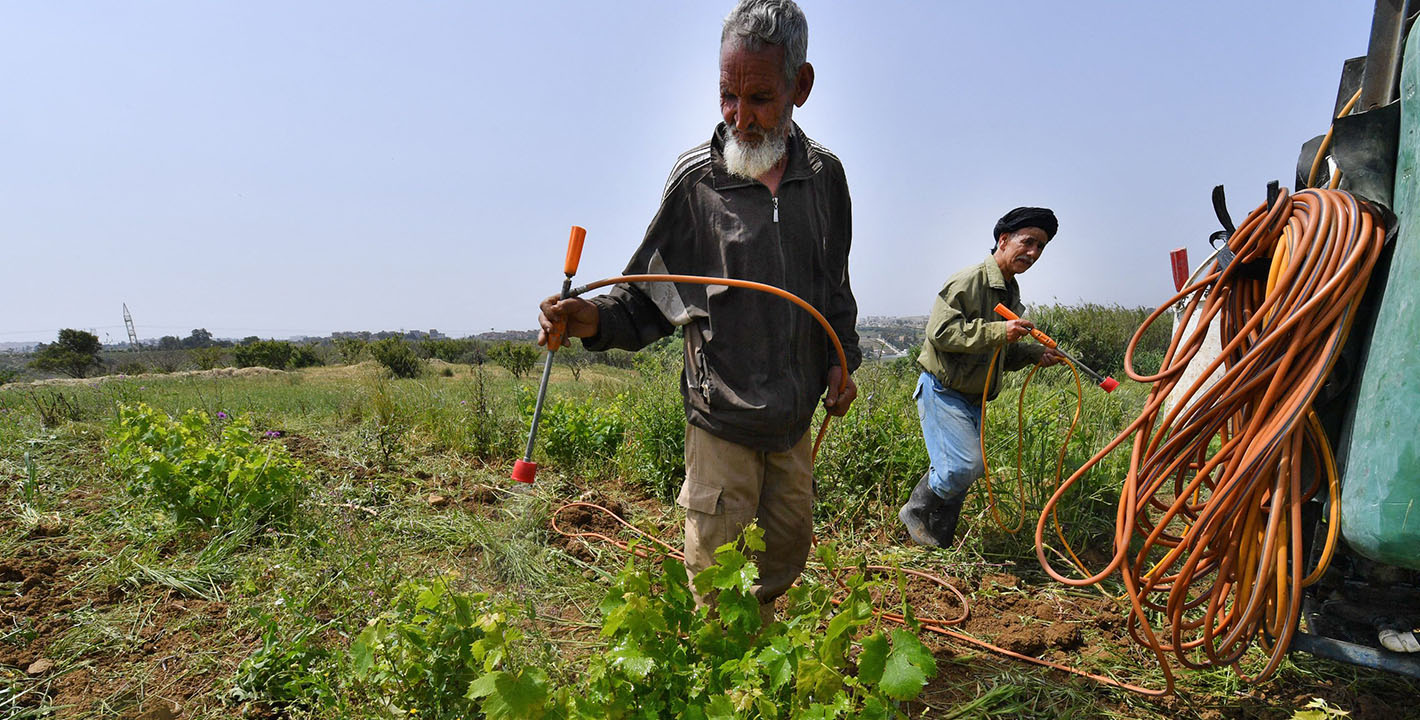
Understanding how farmers in the Oued Sahel-Soummam Valley grapple with climate change is essential for addressing the paradoxes through which adaptation, operating at both individual and institutional levels, deepens the region’s vulnerability and erodes the social fabric and agrarian identity that once defined life.

Ilyssa Yahmi

As the monarchy appears to question its grandest projects, the state could do with more critical debate than rote cheerleading.

Andrew Leber